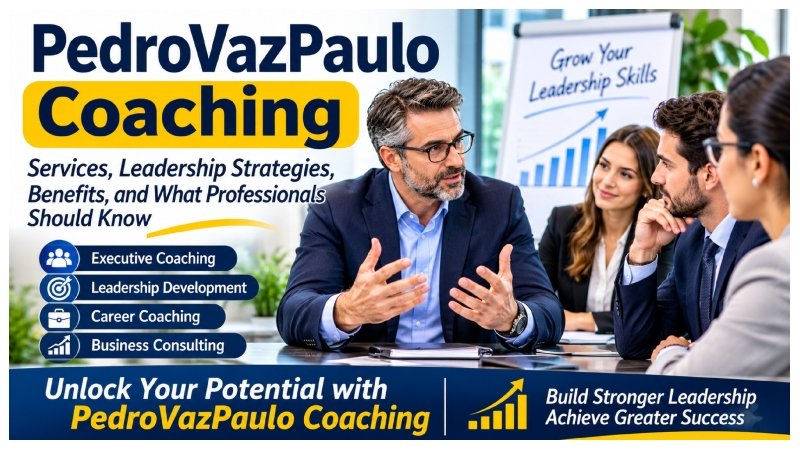
Strong leadership requires more than professional experience. Business owners and executives must make important decisions, manage people, solve problems, and guide their organizations through constant changes. However, even experienced professionals can struggle when their responsibilities increase or their businesses enter new stages of growth. PedroVazPaulo Coaching is a topic worth exploring for professionals interested in executive development, leadership improvement, and practical business guidance.
Associated with PedroVazPaulo Business Consultant, this coaching approach connects professional development with real workplace challenges. Its published information highlights executive coaching, career development, leadership skills, and strategic thinking. The business also describes consulting services that address organizational and operational needs.
Understanding how these services are presented, who may benefit from them, and what to verify before enrolling can help professionals make informed decisions. This guide examines the coaching approach, potential benefits, program structure, and important considerations without treating promotional claims as guaranteed results.
What Is PedroVazPaulo Coaching?
PedroVazPaulo Coaching is associated with executive coaching and professional development for entrepreneurs, business owners, managers, and senior professionals. Its central focus is helping individuals examine their leadership abilities, improve professional decision-making, and develop more effective workplace habits.
Executive coaching generally works through personalized discussions rather than traditional classroom instruction. A coach helps a participant identify challenges, explore different perspectives, establish development goals, and review progress over time.
For example, a company founder might find it difficult to delegate important responsibilities. Although the founder understands the business, personally approving every decision can slow down daily operations. Coaching can help examine this behavior, identify possible concerns, and develop a more structured approach to delegation.
The important distinction is that coaching supports the individual’s development. It does not automatically solve every operational or financial problem within an organization.
Who Is Pedro Vaz Paulo?
Pedro Vaz Paulo is identified on PedroVazPaulo.com as the founder of PedroVazPaulo Business Consultant, a business that states it was established in 2010.
The official website describes a service model that combines business consulting, strategic guidance, technology-related consulting, and executive coaching. Its published philosophy connects organizational improvement with the development of the people responsible for implementing business decisions.
This connection is important because a company can have a promising strategy but still struggle with execution. Managers may lack clear responsibilities, communication may be inconsistent, or business owners may find it difficult to transfer decision-making authority.
However, readers should distinguish between information published by the business and independently verified professional credentials. Anyone considering a coaching engagement should request relevant qualifications, experience, and references before making a financial commitment.
Main Services Associated With PedroVazPaulo Coaching
The published services cover several areas of professional and organizational development. Understanding their differences helps prospective clients identify which type of support may match their needs.
1. Executive Coaching
Executive coaching focuses on improving the abilities of professionals who hold leadership responsibilities.
CEOs, directors, and senior managers regularly make decisions that affect employees, customers, finances, and long-term business objectives. These responsibilities require more than technical expertise.
Executive coaching may address:
- Leadership confidence and self-awareness.
- Strategic decision-making.
- Delegation and accountability.
- Communication with employees and stakeholders.
- Conflict management.
- Emotional intelligence.
- Managing professional pressure.
For example, a newly promoted director may understand departmental operations but struggle to manage former colleagues. Coaching can provide a structured opportunity to examine communication habits, establish professional boundaries, and develop a more effective management style.
2. Leadership Development
Leadership development focuses on the behaviors that influence how individuals guide teams and manage responsibilities.
A strong leader needs to explain expectations, listen to employees, resolve disagreements, and maintain direction during challenging situations.
Several important areas include:
Self-awareness: Understanding personal strengths, weaknesses, and reactions during difficult situations.
Active listening: Giving employees opportunities to express concerns and contribute ideas.
Emotional intelligence: Recognizing emotions and responding thoughtfully instead of reacting impulsively.
Delegation: Assigning responsibilities according to employees’ abilities while maintaining clear expectations.
Strategic thinking: Considering long-term objectives instead of focusing exclusively on immediate problems.
These abilities can help leaders create more organized workplaces and stronger professional relationships.
3. Career Coaching
Career coaching addresses individual professional direction rather than focusing exclusively on company performance.
Some professionals want to move into management, while others are considering a career change or preparing for greater responsibilities. However, deciding which direction to take can be difficult without understanding personal strengths and development needs.
Career coaching may help participants:
- Identify professional strengths and interests.
- Establish realistic career objectives.
- Recognize skills that need improvement.
- Prepare for management opportunities.
- Improve interview and communication skills.
- Evaluate career transitions.
For instance, an experienced employee interested in becoming a department manager may need stronger presentation, delegation, and team-management abilities. A development plan can help prioritize these skills before pursuing a new position.
Career coaching can improve preparation, but it cannot guarantee employment, promotions, or higher salaries.
4. Business Strategy Consulting
Business strategy consulting focuses on organizational direction and long-term planning.
A company may want to enter a new market, introduce another product, improve its competitive position, or expand its operations. These decisions require careful consideration of available resources, customer demand, competition, and potential risks.
Strategic planning may involve:
- Market and competitor analysis.
- Business positioning.
- Growth opportunities.
- Resource allocation.
- Long-term objectives.
- Strategic roadmaps.
- Performance evaluation.
A practical strategy should explain what a company wants to achieve, why the objective matters, who is responsible for each action, and how progress will be measured.
5. Operations and Management Consulting
Operations consulting examines the processes that keep a business running.
As companies grow, informal systems can become inefficient. Employees may repeat tasks, approval processes may create delays, and important information may remain with only one person.
An operations review can identify these problems and help management consider improvements.
For example, a business processing hundreds of customer orders may need a better tracking system. Reviewing workflows and employee responsibilities can reveal where unnecessary delays occur.
The goal is to create processes that support efficiency, accountability, and consistent service.
6. IT and Digital Transformation Consulting
Technology decisions can influence productivity, customer experience, and business operations.
The published service information also lists IT consulting, including technology strategy, systems integration, digital transformation, and automation-related topics.
However, adopting new software does not automatically improve performance. Businesses should first understand their actual needs.
A company experiencing communication problems might benefit from a centralized collaboration system. Another organization may need better data management or improved cybersecurity practices.
The right technology should address a clearly identified business problem rather than introduce unnecessary complexity.
7. Financial, Marketing, and Human Resource Consulting
The business website also lists specialized consulting areas that address different organizational requirements.
- Financial consulting: Examines financial structures, cash flow, costs, and business planning.
- Marketing consulting: Focuses on market positioning, customer acquisition, marketing strategy, and performance.
- Human resource consulting: Addresses recruitment, employee development, performance management, and workplace structure.
These services are different from executive coaching. Their purpose is to examine specific business functions rather than concentrate only on an individual’s leadership development.
How Does the Coaching Process Work?
The exact arrangement should be confirmed with the provider. However, a structured executive coaching engagement generally follows several stages.
Initial Discussion and Goal Setting
The first stage involves understanding the participant’s professional responsibilities and main challenges.
A business owner might want to improve delegation, while a senior manager may need to communicate more effectively with employees.
Specific objectives make it easier to determine what the coaching engagement should address.
Leadership Assessment and Feedback
The next stage examines existing strengths and areas that require development.
Depending on the engagement, this may involve self-assessment, structured questions, professional feedback, or 360-degree assessments.
A 360-degree assessment collects perspectives from people who work with the participant, such as colleagues, supervisors, and direct reports.
These perspectives can reveal differences between how someone views their leadership and how others experience it.
Personalized Development Planning
After identifying development priorities, the coach and participant can establish an action plan.
A useful plan should include clear objectives, realistic deadlines, and practical activities.
For example, someone who struggles with delegation might begin transferring two recurring responsibilities to suitable team members and reviewing the results during weekly meetings.
Practical Application
New ideas become valuable when participants apply them in real situations.
Between coaching sessions, individuals may practice difficult conversations, improve meeting structures, delegate responsibilities, or introduce better feedback habits.
These activities help connect professional learning with everyday responsibilities.
Progress Measurement
The final stage involves reviewing the participant’s development.
Progress should be measured through observable changes rather than general statements such as becoming a better leader.
Useful indicators may include:
- Completing agreed development activities.
- Holding regular employee feedback meetings.
- Delegating more responsibilities appropriately.
- Reducing unnecessary approval delays.
- Improving clarity in team communication.
- Receiving constructive stakeholder feedback.
These indicators help participants understand whether their efforts are producing meaningful improvements.
Potential Benefits of PedroVazPaulo Coaching
The value of coaching depends on the participant’s goals, the quality of the professional relationship, and consistent effort. Nevertheless, structured executive coaching may support several areas of development.
Improved Decision-Making
Leaders frequently face situations where information is incomplete or competing priorities create uncertainty.
Coaching can encourage them to examine assumptions, compare alternatives, and consider possible consequences before making important decisions.
Stronger Workplace Communication
Communication problems can create misunderstandings, reduce employee confidence, and delay projects.
Developing active listening, clear explanations, and constructive feedback habits can help leaders build stronger professional relationships.
Better Delegation and Time Management
Some managers struggle because they try to handle too many responsibilities personally.
Learning to distribute work appropriately can give employees greater ownership while allowing leaders to focus on strategic priorities.
Greater Self-Awareness
Understanding personal behavior is an important part of professional development.
Coaching discussions may help individuals recognize habits such as micromanagement, avoiding difficult conversations, or reacting too quickly under pressure.
More Effective Team Leadership
Clear responsibilities and consistent feedback can help employees understand their roles.
Leaders who listen to their teams and establish realistic expectations may create better conditions for cooperation and accountability.
These benefits are possible development outcomes, not guaranteed results of any specific coaching program.
Who Can Benefit From PedroVazPaulo Coaching?
The coaching and consulting topics associated with the business may be relevant to several professional groups.
| Professional group | Potential development needs |
|---|---|
| Entrepreneurs | Managing growth and developing leadership skills |
| Startup founders | Delegation and team management |
| CEOs and executives | Strategic decisions and organizational leadership |
| Senior managers | Communication and employee development |
| New managers | Transitioning into leadership responsibilities |
| Career-focused professionals | Career planning and professional growth |
| Growing companies | Business strategy and operational improvement |
Coaching is generally most useful for people who are willing to reflect on their behavior, accept feedback, and apply agreed actions.
It may be less suitable when someone needs a purely technical solution or expects another person to make every important decision for them.
PedroVazPaulo Coaching vs. Business Consulting vs. Mentoring
These professional services can appear similar, but they have different purposes.
| Service | Primary focus | Typical approach |
|---|---|---|
| Executive coaching | Individual leadership | Questions, reflection, feedback, and goals |
| Business consulting | Organizational performance | Analysis, recommendations, and planning |
| Mentoring | Professional development | Experience-based guidance |
| Training | Specific knowledge and skills | Structured lessons and practical exercises |
Consider a business owner whose company is struggling with employee productivity.
A business consultant might examine workflows and organizational structure. An executive coach might help the owner improve delegation and communication. A mentor might share lessons from managing a similar business.
Choosing the right service depends on the underlying problem. Some situations may require a combination of these approaches.
PedroVazPaulo Executive Coaching Program Structure
The official website publishes three executive coaching program levels designed for different stages of leadership development.
Basic Program: Six Months
The Basic level focuses on foundational leadership abilities, including communication, emotional intelligence, delegation, and goal setting.
Its published description mentions leadership assessments, personalized feedback, and individual development planning.
This level is presented for participants seeking to strengthen their core management skills.
Advanced Program: Twelve Months
The Advanced level builds on foundational development and places greater emphasis on strategic thinking, influence, and team development.
Its published description also discusses different leadership frameworks and developing the ability to coach others.
Platinum Program: Eighteen Months Plus Ongoing Support
The Platinum level is presented for senior professionals dealing with complex leadership responsibilities.
Its published description includes vision development, change management, 360-degree leadership assessments, and support with high-stakes decisions.
The website also mentions optional ongoing coaching support.
Important: These durations and features come from the provider’s published program description. Prospective participants should confirm current availability, session frequency, total fees, coach qualifications, and contractual terms directly. The published program page does not provide a fixed price list.
How to Evaluate PedroVazPaulo Coaching Before Enrolling
Choosing a coaching provider requires more than reading service descriptions. Professional qualifications, communication, pricing, and the coaching agreement should all be considered.
Verify the Coach’s Qualifications
Ask who will conduct the sessions and what professional training they have completed.
If the provider mentions certifications, request the issuing organization’s name and verify the credential where possible.
Understand the Coaching Method
Ask how sessions are structured, what assessment tools may be used, and how development goals are established.
A clear explanation helps determine whether the service matches your expectations.
Review Pricing and Payment Terms
Request a written breakdown of the total cost, payment schedule, cancellation conditions, and any additional fees.
Avoid making payments before understanding the agreement.
Check Confidentiality
Coaching conversations may involve sensitive workplace issues and professional decisions.
Understand how personal information is handled and whether any progress information will be shared with an employer or other sponsor.
Look for Independent References
Genuine testimonials, identifiable case studies, and professional references can provide additional context.
However, promotional statements should not be treated as independently verified evidence of successful outcomes.
Confirm the Correct Website
The business identifies PedroVazPaulo.com as its official website and publishes a warning about unrelated websites using similar branding.
Before making contact, verify the exact domain, business identity, contact information, and payment recipient. Do not assume that every website containing the PedroVazPaulo name belongs to the same organization.
What Are the Limitations of Executive Coaching?
Although coaching can support professional development, it is important to understand what it cannot accomplish independently.
First, coaching does not guarantee business growth, higher profits, promotions, or improved salaries. These outcomes depend on many factors, including market conditions, organizational resources, and individual performance.
Second, coaching requires active participation. Attending sessions without applying new ideas is unlikely to produce meaningful behavioral changes.
Third, not every professional challenge requires a coach. A company facing a legal dispute needs appropriate legal advice, while an organization with serious accounting problems may need a qualified financial professional.
Finally, the relationship between coach and participant matters. Clear communication, realistic expectations, relevant experience, and professional boundaries are essential.
Understanding these limitations helps individuals approach coaching with realistic expectations.
Frequently Asked Questions About PedroVazPaulo Coaching
1. What is PedroVazPaulo Coaching known for?
PedroVazPaulo Coaching is associated with executive coaching, leadership development, career guidance, and professional improvement. Its published material focuses on decision-making, communication, delegation, and leadership effectiveness.
2. Who founded PedroVazPaulo Business Consultant?
PedroVazPaulo.com identifies Pedro Vaz Paulo as the founder of the business and states that it was established in 2010.
3. What services does PedroVazPaulo offer?
The published service information includes executive coaching, career coaching, business consulting, strategy consulting, IT consulting, financial consulting, marketing consulting, operations consulting, and human resource consulting.
4. How long are the executive coaching programs?
The published program describes three levels: Basic (six months), Advanced (twelve months), and Platinum (eighteen months plus ongoing support). Current terms should be confirmed with the provider.
5. Is PedroVazPaulo Coaching suitable for entrepreneurs?
It may be relevant to entrepreneurs who want to develop leadership abilities, improve delegation, manage growing teams, and strengthen their approach to business decisions.
6. Does executive coaching guarantee business success?
No. Coaching may support better leadership habits and professional decision-making, but business results depend on several internal and external factors.
7. What is the difference between executive coaching and career coaching?
Executive coaching focuses on leadership effectiveness within a professional role. Career coaching concentrates more on professional direction, career transitions, and future opportunities.
8. How can I verify the official PedroVazPaulo website?
The business identifies PedroVazPaulo.com as its official website. Visitors should verify the domain, contact details, business identity, and written service terms before making payments.
9. Is coaching better than business consulting?
Neither is universally better. Coaching focuses on individual development, while consulting examines organizational challenges and provides business recommendations. The right option depends on the problem.
10. What should I ask before joining a coaching program?
Ask about coach qualifications, session frequency, coaching methods, confidentiality, total fees, cancellation rules, and how progress will be evaluated.
Final Thoughts
Professional growth requires continuous learning, practical experience, and the willingness to improve existing habits. PedroVazPaulo Coaching brings together executive development, leadership improvement, and business-related guidance, making it a relevant subject for entrepreneurs, managers, and professionals exploring coaching opportunities. Click here for more information.
Its published program information describes different levels of leadership development, while its wider consulting services address strategic, operational, and organizational concerns.
However, choosing a coaching provider should always involve careful research. Verify the coach’s qualifications, understand the service agreement, review program costs, and establish realistic objectives before enrolling.
Ultimately, effective coaching is not about receiving motivational advice or expecting instant results. It is about identifying genuine professional challenges, taking practical action, and developing better habits that can support long-term career and leadership growth.