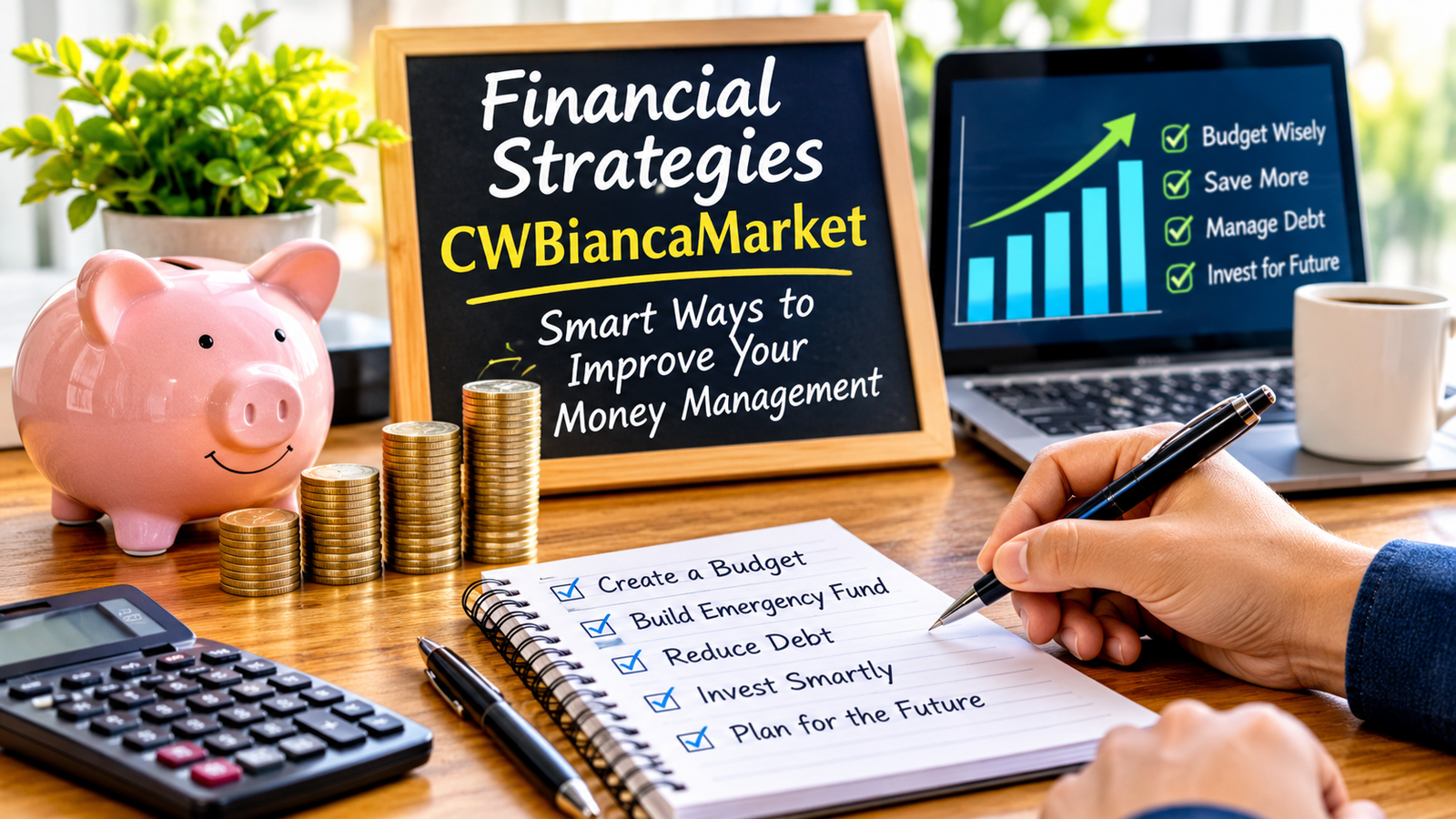
Managing money wisely requires more than earning a steady income. It involves making thoughtful decisions about spending, saving, borrowing, and investing. Whether you are managing household expenses, building personal savings, or planning for future financial goals, having a clear strategy can make a significant difference. Financial Strategies CWBiancaMarket is a useful topic for exploring practical money management principles and understanding how better financial decisions can support long-term stability.
Many people struggle financially not because they lack income, but because they do not have a consistent system for managing it. Everyday purchases, unexpected bills, expensive debt, and poor financial planning can gradually affect their ability to save. Fortunately, developing a few practical habits can help create more control over personal finances.
This guide explores effective budgeting methods, smart saving techniques, debt management approaches, responsible investment principles, and common financial mistakes. It also explains how to build a realistic financial plan that can adapt to changing circumstances.
Understanding Financial Strategies CWBiancaMarket
Financial strategies are organized approaches to managing money and achieving specific financial objectives. They help individuals understand their financial position, prioritize expenses, prepare for unexpected situations, and make informed decisions about future opportunities.
When exploring Financial Strategies CWBiancaMarket, the most useful approach is to focus on practical financial principles rather than expecting a single method to work for everyone. A strategy that works for someone with a regular salary may not suit a freelancer, small business owner, or family with several financial responsibilities.
An effective financial approach generally includes five important areas:
- Income management: Understanding how much money comes in and identifying opportunities to improve earnings.
- Expense control: Monitoring spending and reducing costs that do not support important priorities.
- Savings development: Setting aside money for emergencies and future purchases.
- Debt management: Controlling borrowing costs and developing a realistic repayment schedule.
- Investment planning: Understanding suitable investment opportunities, potential returns, and associated risks.
These areas work together. For example, controlling unnecessary expenses can create additional money for savings, while reducing high-interest debt can free up income for future financial goals.
Why a Strong Financial Strategy Matters
Without a clear financial plan, it is easy to make decisions based on immediate needs instead of long-term priorities. Someone might spend more than expected during one month, delay saving, or rely on credit cards to cover regular expenses.
A structured approach makes these decisions easier to manage.
Greater control over spending
Tracking income and expenses helps you understand where your money goes. It also makes unnecessary purchases easier to identify before they become regular habits.
More financial security
Building emergency savings can reduce dependence on borrowing when unexpected expenses arise. Although savings cannot prevent every financial difficulty, they can provide additional flexibility.
Better debt management
A repayment strategy helps you understand which balances require attention and how interest affects the total amount you owe.
Clearer financial goals
Specific targets give your financial decisions a purpose. Instead of saving without direction, you can work toward goals such as buying a home, funding education, or preparing for retirement.
Improved long-term planning
Consistent financial habits can help you prepare for major life changes and make decisions with greater confidence.
8 Effective Financial Strategies for Smarter Money Management
The most useful financial strategies are practical, measurable, and easy to maintain. Rather than making several dramatic changes at once, focus on developing habits that fit your income and responsibilities.
Create a Budget Based on Your Actual Income
A realistic budget is the foundation of effective money management. It shows how much you earn, what you spend, and how much remains for savings or additional financial goals.
Start by calculating your monthly take-home income. If you receive money from different sources, include each reliable source in your calculation. Next, list essential expenses such as housing, groceries, transportation, utilities, insurance, and minimum debt payments.
After recording essential costs, review optional spending. Restaurant visits, entertainment, shopping, and unused subscriptions can affect your monthly budget more than you might realize.
One popular budgeting framework is the 50/30/20 rule:
| Category | Suggested Percentage | Examples |
|---|---|---|
| Essential needs | 50% | Housing, food, utilities, transportation |
| Personal wants | 30% | Shopping, entertainment, dining |
| Savings and debt repayment | 20% | Emergency funds, savings, extra debt payments |
These percentages are starting guidelines, not mandatory limits. People living in expensive areas or supporting larger households may need to allocate more toward essential expenses.
The best budget is one that reflects your actual circumstances and helps you make consistent financial progress.
Build an Emergency Fund Before Taking Unnecessary Risks
Unexpected expenses can disrupt even a carefully prepared financial plan. A medical bill, vehicle repair, urgent home maintenance problem, or temporary loss of income can create pressure when there is no money available to cover it.
An emergency fund provides protection against these situations.
Start with a small, achievable target. For example, saving $500 or $1,000 can provide an initial financial cushion, depending on your circumstances. Gradually increase the amount until you have approximately three to six months of essential living expenses.
To build this fund more consistently:
- Set a monthly savings target.
- Automate transfers after receiving your income.
- Keep emergency savings separate from everyday spending money.
- Avoid using the fund for vacations or nonessential purchases.
- Replace the money gradually whenever you need to use it.
An emergency fund should generally remain accessible and relatively low-risk. Its purpose is financial protection, not generating high investment returns.
Control Spending Without Sacrificing Every Enjoyment
Reducing unnecessary expenses does not mean eliminating everything you enjoy. Instead, it means making sure your spending reflects your priorities.
Begin by reviewing your recent bank and credit card statements. Identify recurring payments, frequent small purchases, and services that provide little value.
For example, you might discover that several streaming subscriptions are being charged every month even though you regularly use only one. Canceling unused services can create immediate savings.
Other practical approaches include:
- Preparing meals at home more frequently.
- Comparing prices before major purchases.
- Using shopping lists to avoid impulse buying.
- Reviewing mobile, internet, and insurance costs.
- Waiting before purchasing expensive nonessential items.
- Setting a monthly limit for entertainment and shopping.
Consider a simple example. If you reduce unnecessary spending by $15 each week, you could keep approximately $780 over a year.
The key is to make small adjustments that are realistic enough to maintain.
Develop a Clear Debt Repayment Strategy
Debt can become a serious financial burden when interest charges consume a large portion of your available income. Therefore, managing outstanding balances should be a priority, especially when dealing with high-interest credit cards or personal loans.
Start by creating a complete list of your debts. Record the outstanding balance, interest rate, minimum payment, and due date for each account.
Once you understand your position, consider two established repayment methods.
Debt avalanche method
This approach focuses on paying extra toward the debt with the highest interest rate while maintaining minimum payments on other accounts.
It can reduce the total interest paid over time, making it attractive for people who want to minimize borrowing costs.
Debt snowball method
This method focuses on paying off the smallest balance first. After clearing that account, you direct the available extra money toward the next smallest balance.
Although it may not minimize interest costs, seeing individual debts disappear can help some people remain motivated.
Both methods require consistency. Choose the one that best matches your financial situation, continue making required payments, and avoid unnecessary new borrowing.
Set Specific Savings Goals
Saving money becomes easier when you know exactly why you are saving.
Instead of setting a general goal to save more, create specific targets with amounts and deadlines.
For example:
| Savings Goal | Example Target | Suggested Timeline |
|---|---|---|
| Emergency savings | $1,000 | 6–12 months |
| New laptop | $1,200 | 12 months |
| Vacation | $1,500 | 18 months |
| Home deposit | $10,000 | Based on income |
These figures are illustrations, not universal recommendations. Adjust them according to your income and personal responsibilities.
You can also create separate savings accounts or use budgeting tools to track different goals. This makes it easier to understand your progress and avoid spending money intended for another purpose.
Most importantly, automate your savings whenever possible. Treating savings as a regular financial commitment can help you remain consistent.
Understand Investment Opportunities and Their Risks
Investing can help people work toward long-term financial goals, but it requires research and an understanding of potential losses.
Before investing, consider your financial position, investment timeline, risk tolerance, and existing obligations. Money needed for rent, essential bills, or immediate emergencies should not be exposed to unnecessary market risk.
Some common investment options include:
Stocks: Stocks represent ownership in companies. Their prices can increase or decrease depending on company performance, economic conditions, and market expectations.
Bonds: Bonds are debt securities issued by governments or companies. Their risks depend on factors such as credit quality, interest rates, and maturity.
Mutual funds: These funds combine money from multiple investors to purchase a collection of assets managed according to a particular investment objective.
Exchange-traded funds: ETFs provide access to groups of securities and trade on stock exchanges. Some track broad market indexes, while others focus on specific industries or asset classes.
Retirement accounts: Depending on the country, retirement accounts may offer tax advantages and help individuals prepare for future living expenses.
A few important principles can support responsible investing:
- Research an investment before committing money.
- Understand management fees and other costs.
- Diversify rather than depending on one asset.
- Consider your investment timeline.
- Avoid decisions based on market excitement or fear.
- Be cautious of promises of guaranteed high returns.
Remember that diversification can help manage certain risks, but it cannot eliminate the possibility of losing money.
Use Financial Technology to Improve Money Management
Digital financial tools can make everyday money management easier. Budgeting applications, banking platforms, expense trackers, and spreadsheets can help organize financial information in one place.
For example, a budgeting application may categorize transactions into groceries, transportation, housing, and entertainment. This makes it easier to identify spending patterns without manually calculating every purchase.
Useful features to look for include:
- Automatic expense categorization.
- Monthly budget tracking.
- Bill payment reminders.
- Savings goal monitoring.
- Account activity notifications.
- Spending reports and financial summaries.
However, convenience should not replace security. Use strong passwords, enable multifactor authentication where available, and verify that financial applications are legitimate before connecting accounts.
Technology should support better decisions, not encourage unnecessary spending or risky financial behavior.
Review and Adjust Your Financial Plan
A financial strategy should never remain unchanged when your circumstances are different.
Your income may increase, household expenses may rise, or you may need to prepare for a major purchase. These changes can affect how much you should save, spend, or allocate toward debt repayment.
Schedule a monthly financial review.
During this review, ask yourself:
- Did I stay within my planned budget?
- Did I meet my savings target?
- Have my outstanding debts decreased?
- Were there unexpected expenses?
- Do my current financial goals still make sense?
Use your answers to adjust the following month’s plan.
A regular review also helps identify small financial problems before they become more difficult to manage.
Financial Planning for Individuals With Different Income Levels
Not every financial strategy works equally well for every person. Income, household size, location, employment type, and existing obligations all influence financial decisions.
For People With a Regular Salary
Employees with predictable monthly income can benefit from automatic savings transfers and scheduled bill payments.
Creating a budget around take-home pay makes it easier to plan for essential expenses and avoid spending money that has already been allocated to future goals.
For Freelancers and Self-Employed Individuals
Freelancers often experience changes in monthly income. Therefore, maintaining a financial buffer is particularly important.
Calculate your average income over several months instead of planning around your highest-earning period. Set aside money for taxes according to local requirements and maintain separate records for business and personal expenses.
For Small Business Owners
Business owners should monitor cash flow carefully. Revenue does not always equal profit, and having money in a business account does not necessarily mean all of it is available for personal use.
Track operating expenses, customer payments, outstanding invoices, taxes, and upcoming obligations.
Maintaining separate business and personal accounts can also make financial reporting easier.
For People With Limited Income
When income is tight, prioritize housing, food, utilities, transportation, healthcare, and minimum debt payments.
Look for realistic opportunities to reduce recurring costs. Even small savings can create additional flexibility over time.
Avoid comparing your financial progress with people who have different incomes or responsibilities. A sustainable plan should be based on what you can realistically afford.
Common Financial Mistakes That Can Slow Your Progress
Even people with good intentions can make financial decisions that create unnecessary difficulties. Recognizing these mistakes can help you build a stronger financial foundation.
Ignoring small expenses: Frequent low-cost purchases can become significant when repeated throughout the month. Reviewing transactions helps identify spending patterns.
Relying too heavily on credit cards: Using credit to cover everyday expenses without a repayment plan can increase debt and interest costs.
Having no emergency savings: Without accessible savings, an unexpected expense may require expensive borrowing.
Investing without understanding the risks: Buying an investment simply because it is popular can expose you to losses you may not be prepared to handle.
Setting unrealistic savings targets: Extremely aggressive goals can become difficult to maintain and may lead to frustration.
Failing to review financial goals: A plan that worked last year may no longer reflect your income, expenses, or responsibilities.
Avoiding these mistakes does not guarantee financial success, but it can improve your ability to make informed decisions.
A Simple 30-Day Plan to Improve Your Financial Habits
If you are unsure where to begin, a short action plan can make financial improvement more manageable.
| Time Period | Action | Expected Benefit |
|---|---|---|
| Days 1–7 | Record income and expenses | Understand your current position |
| Days 8–14 | Create a realistic monthly budget | Organize spending priorities |
| Days 15–21 | Set a savings goal and review debt | Improve financial preparation |
| Days 22–30 | Review progress and adjust your plan | Build consistent habits |
At the end of the month, compare your actual spending with your original budget.
Do not worry if everything does not go according to plan. The purpose of this exercise is to understand your financial behavior and identify improvements you can maintain.
How to Make Financial Strategies Work in the Long Term
Developing a financial plan is only the beginning. Long-term improvement depends on following that plan consistently and making adjustments when necessary.
Start by choosing a small number of priorities. For example, you might focus on reducing high-interest debt and establishing emergency savings before exploring more complex investment opportunities.
Next, create systems that make good financial decisions easier. Automatic savings transfers, bill reminders, spending limits, and monthly reviews can reduce the effort required to manage money.
It is also important to continue learning. Financial products, interest rates, tax rules, and economic conditions can change. Use reliable sources when researching financial decisions, and seek qualified professional advice when your circumstances require it.
Most importantly, measure progress using your own financial goals rather than comparing yourself with other people. A strong financial strategy is not about making the most money possible in the shortest time. It is about using available resources responsibly and building a more secure future.
Final Thoughts
Financial Strategies CWBiancaMarket provides an opportunity to explore the practical principles behind better money management. Budgeting, saving, responsible borrowing, investment education, and regular financial reviews all contribute to a more organized approach to personal finances.
You do not need a complicated system to begin improving your financial position. Start by understanding your income, tracking expenses, setting realistic savings goals, and developing a clear plan for managing debt.
As your financial circumstances change, review your priorities and adjust your approach. Consistent improvements, even when they seem small, can create meaningful progress over time.
Ultimately, successful financial management comes from informed decisions, realistic expectations, and habits that support your long-term goals. Click here for more information.
Frequently Asked Questions
1. What does Financial Strategies CWBiancaMarket mean?
Financial Strategies CWBiancaMarket is a search topic associated with exploring financial planning and money management approaches. Relevant subjects include budgeting, saving, debt management, spending decisions, and investment education.
2. What is the best financial strategy for beginners?
Starting with a realistic monthly budget is one of the most useful approaches. Track your income and expenses, prioritize essential bills, build emergency savings, and develop a manageable debt repayment plan.
3. How can I improve my financial situation without increasing my income?
Review recurring expenses, reduce unnecessary purchases, manage outstanding debt, and establish regular savings habits. These steps can help you use your existing income more effectively.
4. How much money should I keep in an emergency fund?
A common long-term target is three to six months of essential living expenses. However, you can begin with a smaller amount and increase your savings gradually.
5. Which budgeting method is suitable for personal finance?
The 50/30/20 rule is a popular starting point, but it is not suitable for every situation. Some people may benefit more from zero-based budgeting, where every dollar of income receives a specific purpose.
6. Should I pay off debt or start investing first?
The answer depends on your interest rates, financial obligations, and available savings. Building a basic emergency fund and addressing expensive debt are often sensible priorities before taking additional investment risks.
7. How often should I review my financial strategy?
A monthly review is useful for checking spending, savings, and debt repayment. You should also reassess your plan after major changes in income, employment, household expenses, or financial responsibilities.
8. Can financial technology help with budgeting?
Yes. Budgeting applications and expense trackers can help organize transactions, monitor spending, set savings goals, and receive payment reminders. Choose secure tools and review their privacy policies before connecting financial accounts.