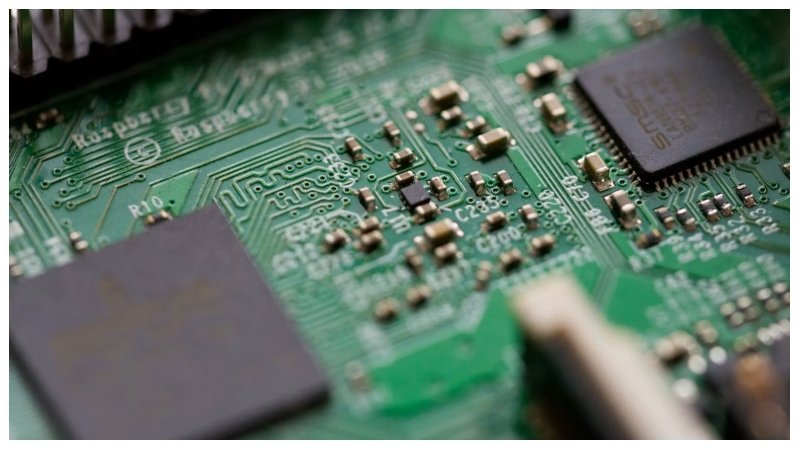
Deep tech companies can offer enormous upside, but they also come with unusual risks. Their products often depend on advanced research, specialized talent, and long development timelines. That makes co-investing different from backing a typical software startup.
Capital allocation toward heavy technology sectors reached milestone figures across key regions recently. According to the European Deep Tech Report, funding into European deep tech startups reached $20.3 billion in 2025. Furthermore, data from the Royal Academy of Engineering shows that UK deep tech startups alone have attracted $43.7 billion in venture capital since 2019.
Before committing money alongside other investors, you need to understand what actually supports the company. You should also know how much capital it needs before reaching commercial success.
Here are a few things worth checking before joining a deep tech investment.
Understand What Makes the Technology Defensible
Before investing, take time to understand exactly what the company has developed. Deep tech businesses often rely on patents, scientific discoveries, proprietary hardware, or difficult engineering breakthroughs.
Those advantages can create strong barriers against competitors, but they can also require years of development. You need to know whether the technology solves a genuine problem for customers. A technically impressive product does not automatically become a commercially successful business.
It also helps to examine how difficult the technology would be for competitors to replicate. Look at patents, research partnerships, intellectual property ownership, and the expertise behind the development.
Ask whether the company has something genuinely difficult to reproduce at scale. You should also consider whether newer technologies could make its solution outdated. The strongest opportunity usually combines meaningful technical differentiation with a clear path toward commercial adoption.
Look Closely at the Company’s Existing Backers
A company’s existing investors can reveal plenty about its credibility and future prospects. Look at who has already committed capital and understand what those investors contribute beyond money.
Experienced deep tech investors may provide technical expertise, industry connections, hiring support, or access to later funding rounds. Their involvement can become particularly valuable when commercialization takes longer than originally expected. However, recognizable names should never replace your own assessment of the company’s fundamentals.
You should also consider expanding your search beyond your country’s borders when exploring potential investments. Different countries have developed strong ecosystems for supporting deep tech research and commercialization. Israel provides a relevant example here. There are plenty of co-investment opportunities in Israel given how Israeli tech companies receive government-backed funding.
This support is provided through grants and co-investment frameworks from the Israel Innovation Authority. The authority’s support helped Israel become a leading global deep tech hub valued at $112 billion, as noted by the Israel Innovation Authority. Fueled by strengths in AI, semiconductors, and medical devices, the sector secured $2.5 billion in investments in early 2025.
The authority’s programs provide investment that helps reduce private investor exposure. Such structure and backing, particularly from the government, can create attractive investment opportunities while introducing international investors to strong innovation ecosystems.
Check How Long Your Money May Stay Invested
Deep tech investments usually require more patience than many conventional startup investments.
AI consultant Pamela Cheong points out how deep tech requires years of intense research, testing, and validation before a product can launch. In contrast, traditional startups can deploy a minimum viable product within months to begin learning immediately.
You therefore need to understand the company’s development timeline before committing capital. Otherwise, you could find yourself waiting much longer than your original investment strategy expected.
Pay close attention to milestones that should increase the company’s value over time. These could include successful trials, regulatory approvals, manufacturing targets, major contracts, or technical performance improvements.
Ask what milestones the company expects to reach before requiring another funding round. You should also understand how much additional capital those milestones might require. A company with strong technology can still create problems when investors repeatedly face unexpected funding requirements.
Examine the Commercial Opportunity Beyond the Technology
A breakthrough technology means little if customers have no reason to purchase it. Before investing, examine the market size, customer demand, pricing model, and competitive landscape.
Deep tech founders sometimes focus heavily on engineering while commercial development receives less attention. That can create a gap between proving something works and convincing customers to pay for it. Your investment decision should therefore consider commercial readiness alongside technical progress.
Try to understand who will actually buy the company’s product and why. Speak with industry specialists when possible, particularly when the technology targets a highly specialized market. Check whether customers are already testing the product or signing contracts.
Existing commercial relationships can provide stronger evidence than ambitious revenue forecasts. You should also examine whether manufacturing costs could prevent the company from achieving attractive margins. A large theoretical market does not guarantee practical investment returns.
Forecast market size can be striking, as quantum technology shows. McKinsey estimates the three quantum technology pillars (quantum computing, quantum communication, and quantum sensing) could generate up to $97 billion in revenue worldwide by 2035. Quantum computing alone is projected to grow from $4 billion in revenue in 2024 to as much as $72 billion in 2035.
However, you must consider the actual commercial opportunity behind your preferred technology. Evaluating this true business potential is what ultimately matters most.
FAQs
How do deep tech companies navigate regulatory approval and compliance challenges?
Deep tech companies should identify applicable regulations early and map requirements to each stage of product development. They often work with regulatory specialists, legal counsel, testing laboratories, and relevant authorities. Maintaining thorough documentation, conducting required testing, and building compliance into product design can reduce costly delays later.
What role does academic research or university technology transfer play in deep tech co-investments?
University research can provide the scientific foundation, intellectual property, and technical expertise behind deep tech ventures. Technology transfer offices may help commercialize research through licensing, patents, or startup formation. For co-investors, understanding ownership rights, licensing terms, and the technology’s validation stage is important before investing.
How do follow-on funding strategy and dilution expectations affect deep tech co-investors?
Deep tech companies often require substantial capital and longer development timelines, making future funding rounds important. Co-investors should estimate how additional financing could dilute their ownership and determine whether they can participate in later rounds. A clear follow-on strategy helps investors plan capital commitments and manage their expected ownership.
Statistics on Deep Tech Investment, Funding, and Market Growth
| Funding into European deep tech startups in 2025 | $20.3 billion |
| Venture capital attracted by UK deep tech startups since 2019 | $43.7 billion |
| Potential global quantum technology revenue by 2035 | Up to $97 billion |
| Quantum computing revenue in 2024 | $4 billion |
| Potential quantum computing revenue by 2035 | Up to $72 billion |
Co-investing in deep tech requires more than spotting an exciting scientific breakthrough. You need to understand the technology, investors, development timeline, commercial market, and investment structure.
Each factor can significantly influence whether an apparently promising company becomes a worthwhile investment. Taking time to investigate these areas can help you distinguish genuine potential from impressive presentations.
It is also worth remembering that diversification does not mean investing blindly across different countries. International ecosystems can offer valuable opportunities when government programs and private investors support innovation together. Click here for more Information.
Ultimately, the best co-investment decision comes from understanding both the opportunity and the risks.